Durres, Albania – July 2018

Albania was the kind of country I visited with zero prior knowledge. I fell in love with it very quickly.

I checked into my hostel, set my bag down next to my bunk bed, plugged my phone into the outlet and stepped out onto the small balcony overlooking the Illyria square in Durres, Albania, the second largest city in this small, unnoticed Balkan nation. In the center of this plaza stood a large fountain that sprouted arcs of water in each cardinal direction. The square’s mosque, Xhamia E Madhe, was adjacent to my balcony. I sat listening to the call to prayer softly echoing throughout the city. The sun was gently setting over the Adriatic.
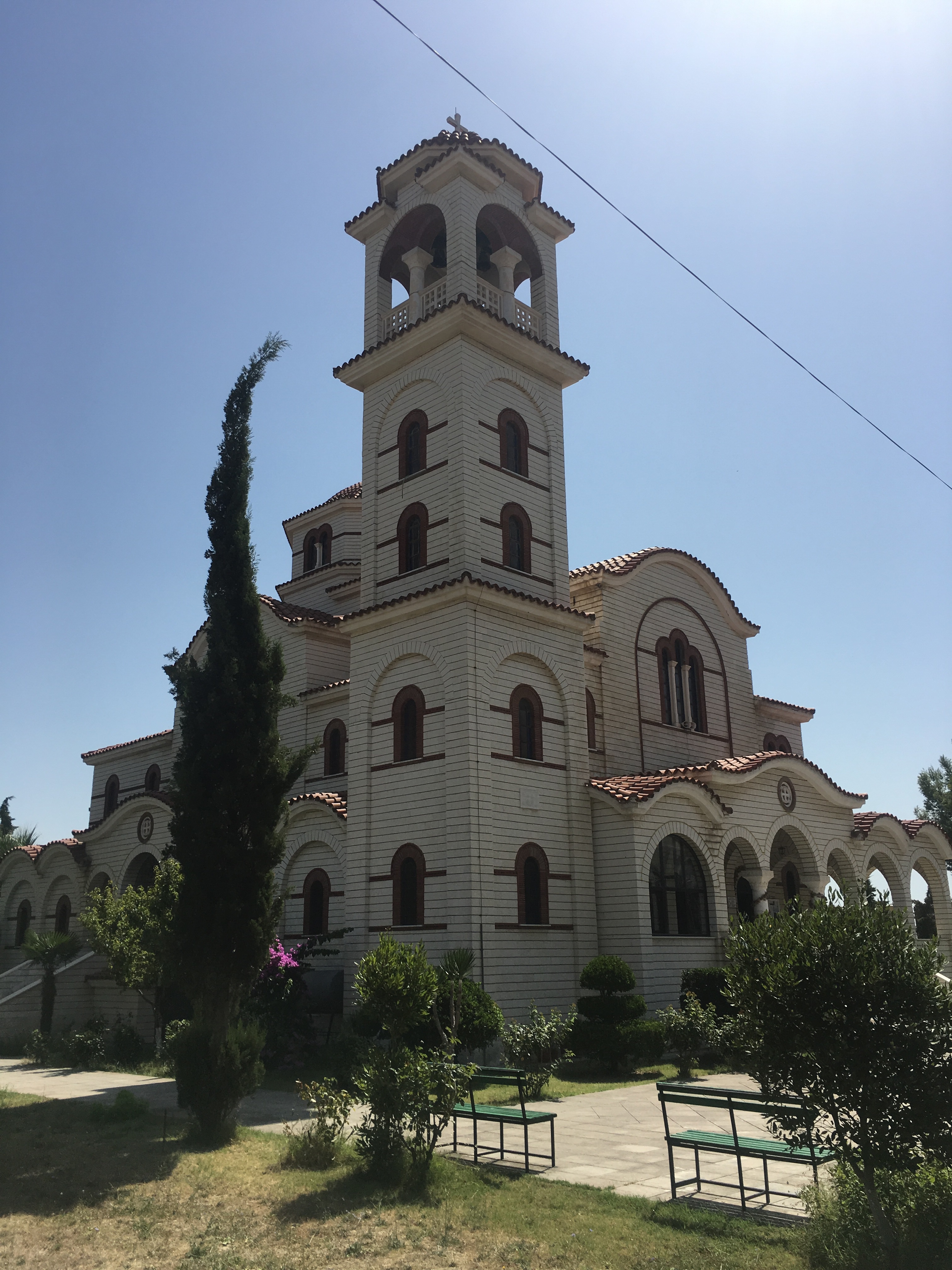
Albania is perhaps the most forgotten nation in all of Europe. An enigmatic mist blurs its history from anyone outside the Balkans. I didn’t even know the name of their dictator of 40 years before arriving into this underdeveloped, yet stunningly beautiful mountainous country in the Balkans. Enver Hoxha formed the communist party of Albania in a tobacco shop in Tirana, the country’s quirky capital, in the 1930s. When he took power, he began modernizing Albania via collective farming, nationalizing banks and businesses, outlawing religion, and executing dissidents. After Stalin died, he turned to Mao for aide for another two decades. He was also notoriously paranoid; war bunkers scatter throughout Albania (approximately 15 per square mile, according to Wikipedia), constructed by Hoxha as a security measure against the Americans he was very certain would bomb him during the height of the Cold War. They’re now a prime selfie location.
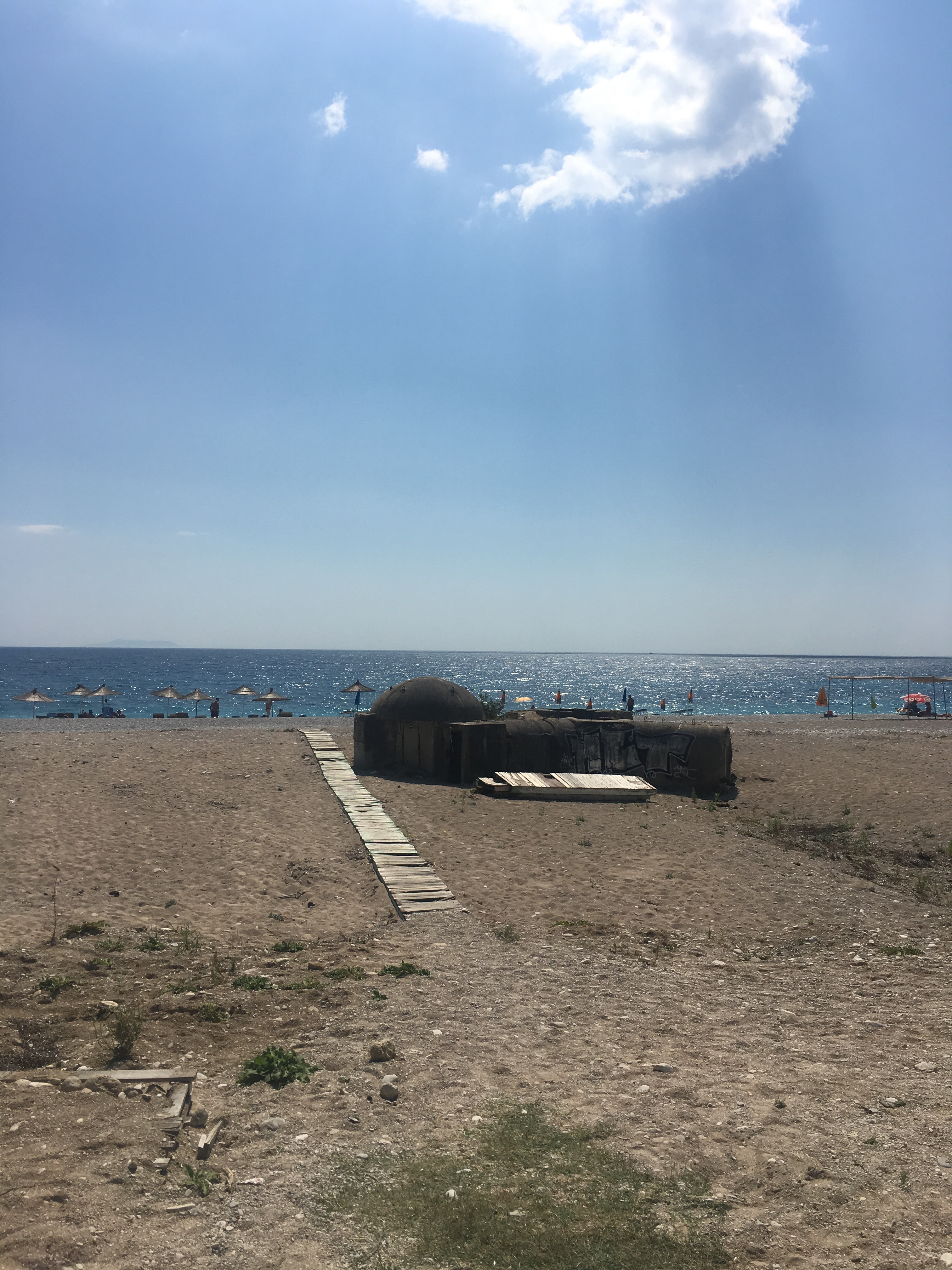
Evacuation bunker!

Hoxha died in 1985, yet Albania is slowly still waking from a deep nightmare under his rule. Since this time, the country has gradually transitioned from being a former ironclad communist nation devoid of free thought and expression to a tourist location for Europeans looking for the next place to vacation.

I learned all of this from a local Albanian girl who gave me a walking tour of the city. She showed me ruins from the Romans, Greek, Byzantine, and Ottomans, all of who passed through Albania at some point in time. Albania is, historically, inseparable in her domestic and foreign affairs, a country where larger empires have always slithered around the corner waiting to strike. From this perspective, perhaps the bunkers spread around the country are not too surprising after all. Despite the constant invaders, Albanians still retain an unwavering pride for their nation, particularly their language that is an Indo-European anomaly. It’s incredibly difficult to grasp, I could barely say, “thank you” clearly.

My guide showed me the ruins of an old market from the Byzantine era discovered only a year before I visited. The mayor had recently given the city permission to excavate the region in order to build new hotels. The idea behind the developments is to transform Albania into the next Miami Beach. They’ve accidentally unearthed markets all over Durres that date back to ancient Greece. The guide voiced her disapproval at the government’s decision to modernize Albania. “That fountain in the main square was a Greek fountain from 4th century BC until they made it into a tourist destination. It now has neon lights and looks very tacky. The fountain before was beautiful. I used to spend my childhood evenings there with my friends eating ice cream and chatting. Now it’s not the same.”
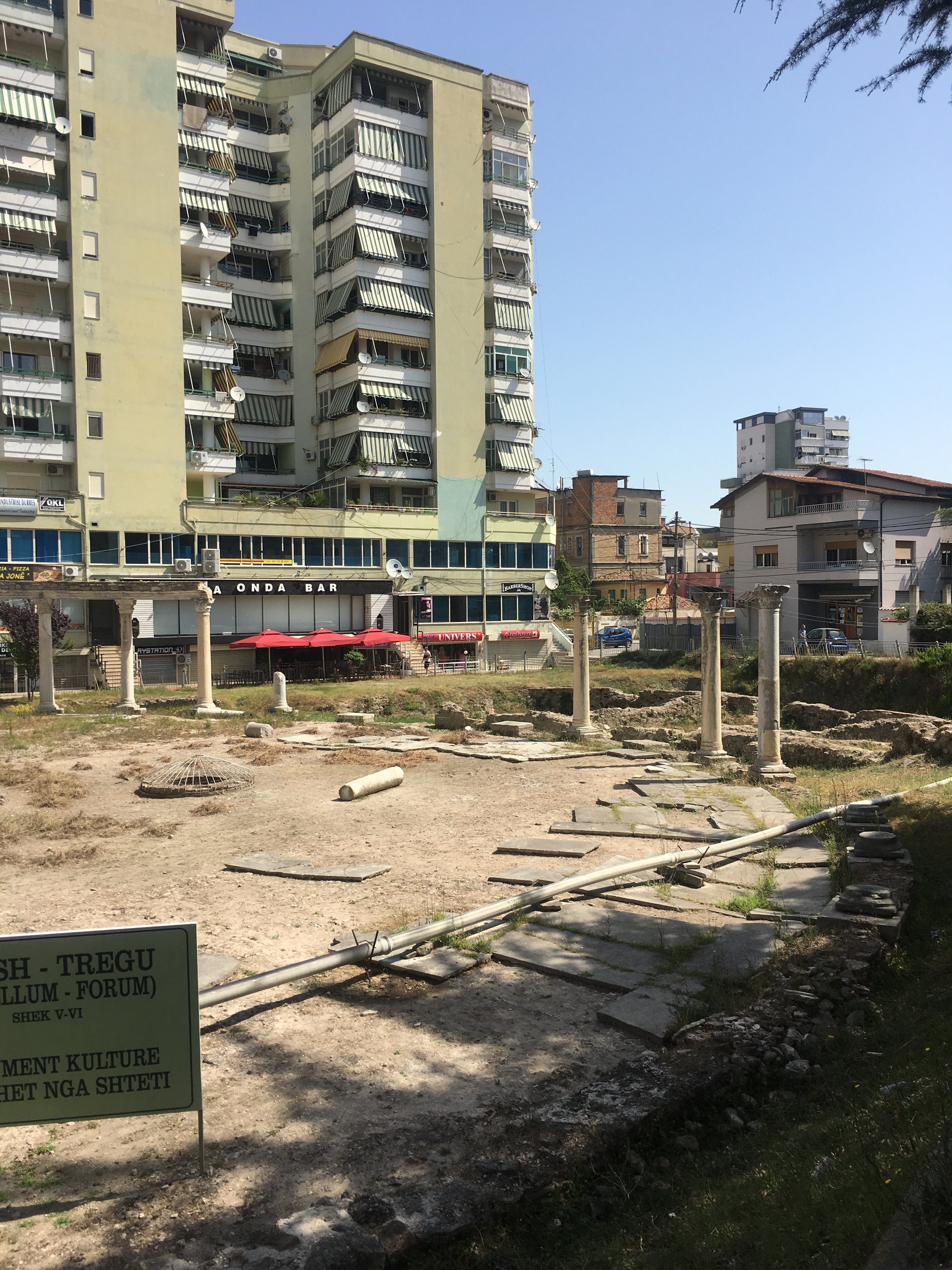
Former Byzantine market. Hotels coming soon…

She then showed me a statue of Queen Teuta. I know nothing about her, I told her. “She was the Queen of the Illyrians, the original Albanians,” she explained. “The Romans detested her because she used to attack their ports and vessels in order to maintain independence for her people. Rome was always trying to take over the other side of the Adriatic Sea; it was a very strategic place for them militarily. They would later wage war on us, but Queen Teuta refused to be subjected to Roman rule. After the conflict, she threw herself from the Orjen Mountains in the North. She would have rather killed herself than allow herself to be controlled by the Romans. We love her for that. She’s our feminist icon, which is very important to me, as I think sexism here is atrocious. We need more women like her today.”

Afterwards, we went to a beach outside the city that was crowded with tourists. “You see? It’s already happening,” she told me. “It wasn’t like this a year ago. The beach was quiet. You could get a chair without a problem. Now there are all these beach bars. Techno music will be next.” I don’t doubt her. After the beach, we got ice cream, an Albanian tradition, she said. “We all love our afternoon ice cream and to walk through the city as the sun sets. And how could you not? The sea looks so beautiful when the sun touches it.” She was right. There was a glow to Durres during the sunset that showed it in a new light I hadn’t noticed yet, a light fetching a history of empire and rebellion. I drifted off to sleep later that night with this light still sketching patterns behind my eyes.
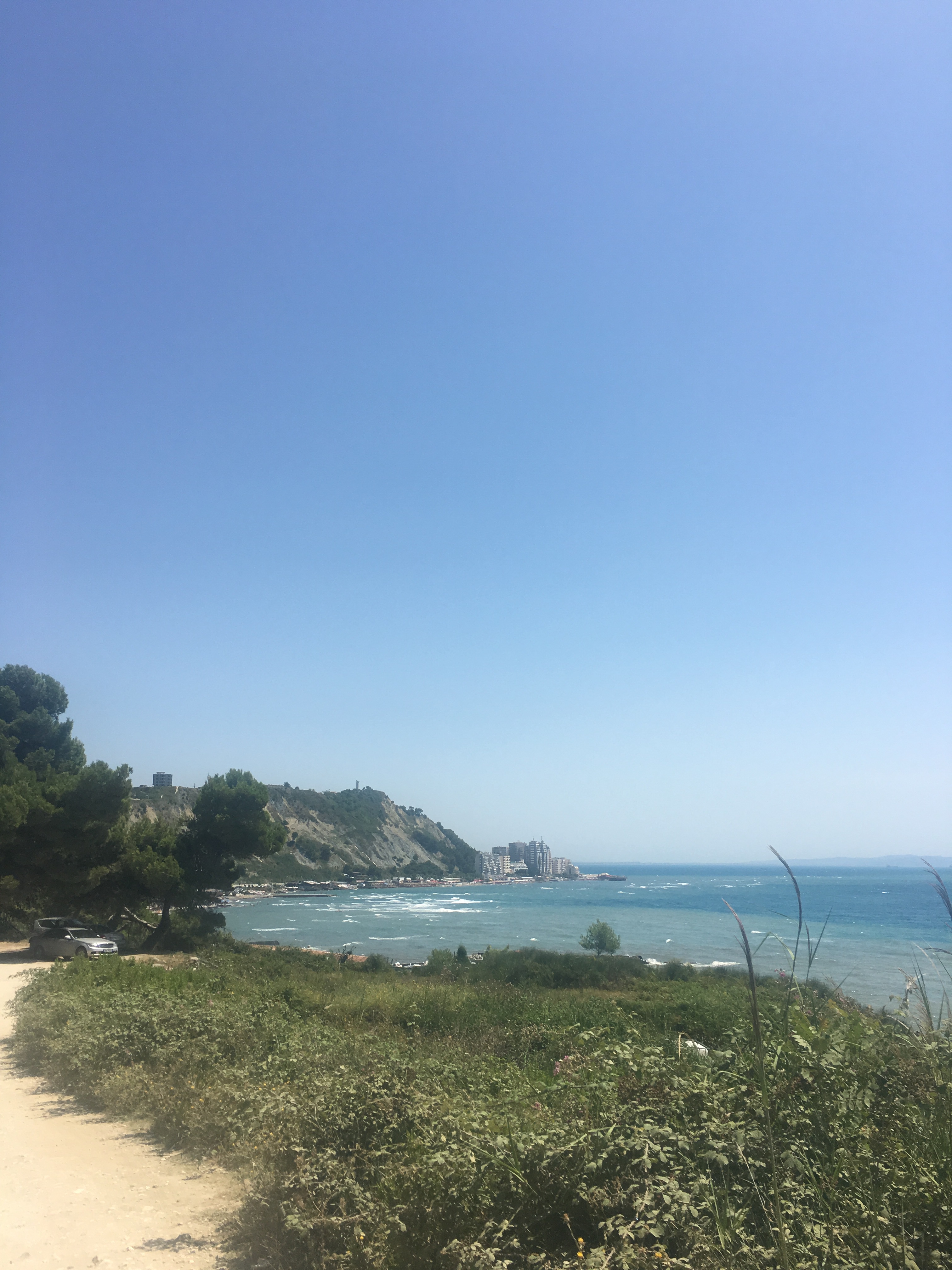
The contrast between old and new is astounding in Albania. You witness someone stepping out of their front door after a long sleep to discover that their neighborhood has changed without them, so they hasten to copy their neighbors. Albania is working towards becoming a tourist destination. I’m probably participating in the process by writing this piece. Locals have mixed feelings about it; Albania is poor, underdeveloped. A tourist industry could open up job opportunities and pour money in to the country. The result, however, may raise corruption levels and bulldoze more Greek fountains and Byzantine markets so as to raise beachfront hotels from the ground, ushering in a wave of tourism. The historical charm of the city might evaporate into the mist and disappear before our eyes. Before many have a chance to truly see the country for which queen Teuta once threw herself from the mountaintop.
Hamburg, Germany – July 2018

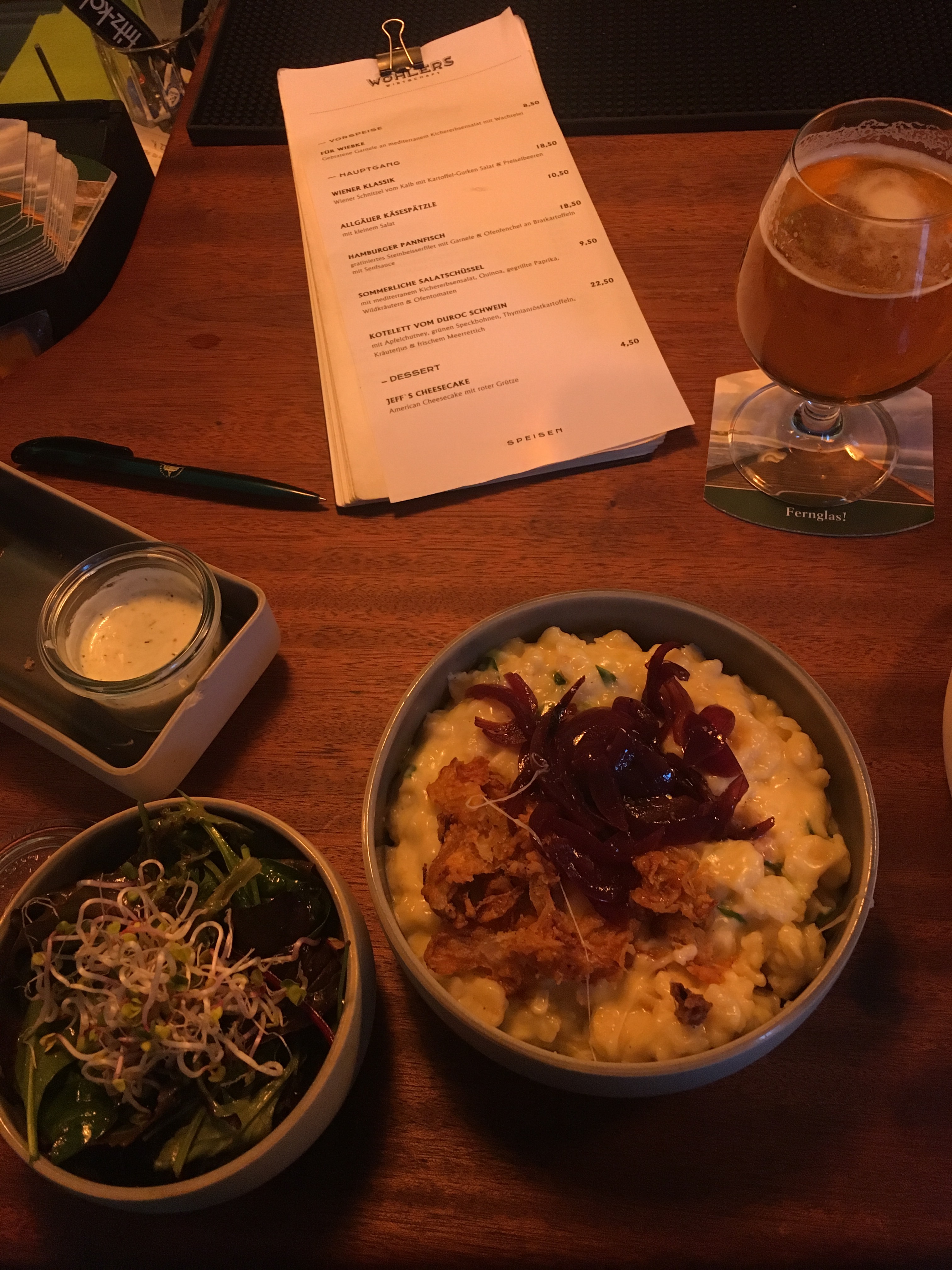
Allgäuer käsespätzle – bliss in a bowl

My attempt to describe Hamburg will surely fall short, a spectacular place I visited for a mere forty-eight hours last summer. The experience was so fleeting that any attempt to sufficiently assess the large, profound German metropolis will undoubtedly misfire. In spite of that, the fleeting experience was a vivid one, a unique, alluring city I’ve been unable to forget since I first visited last July. The misfire will be worth the shot in the end.

I went with a very close friend from the United States during the World Cup. We’d made plans to visit Denmark after our few days in London and we foolishly approached Hamburg as only being a convenient stopover between the two countries, just a city that fits a logical route on the map. I’d barely undertaken any research on traveling to Germany; my knowledge of the country was woefully ignorant, consisting of the Krautrock bands I’d worshipped in college, the world-renowned beer drinking culture, German Expressionism, and the shadowed past.

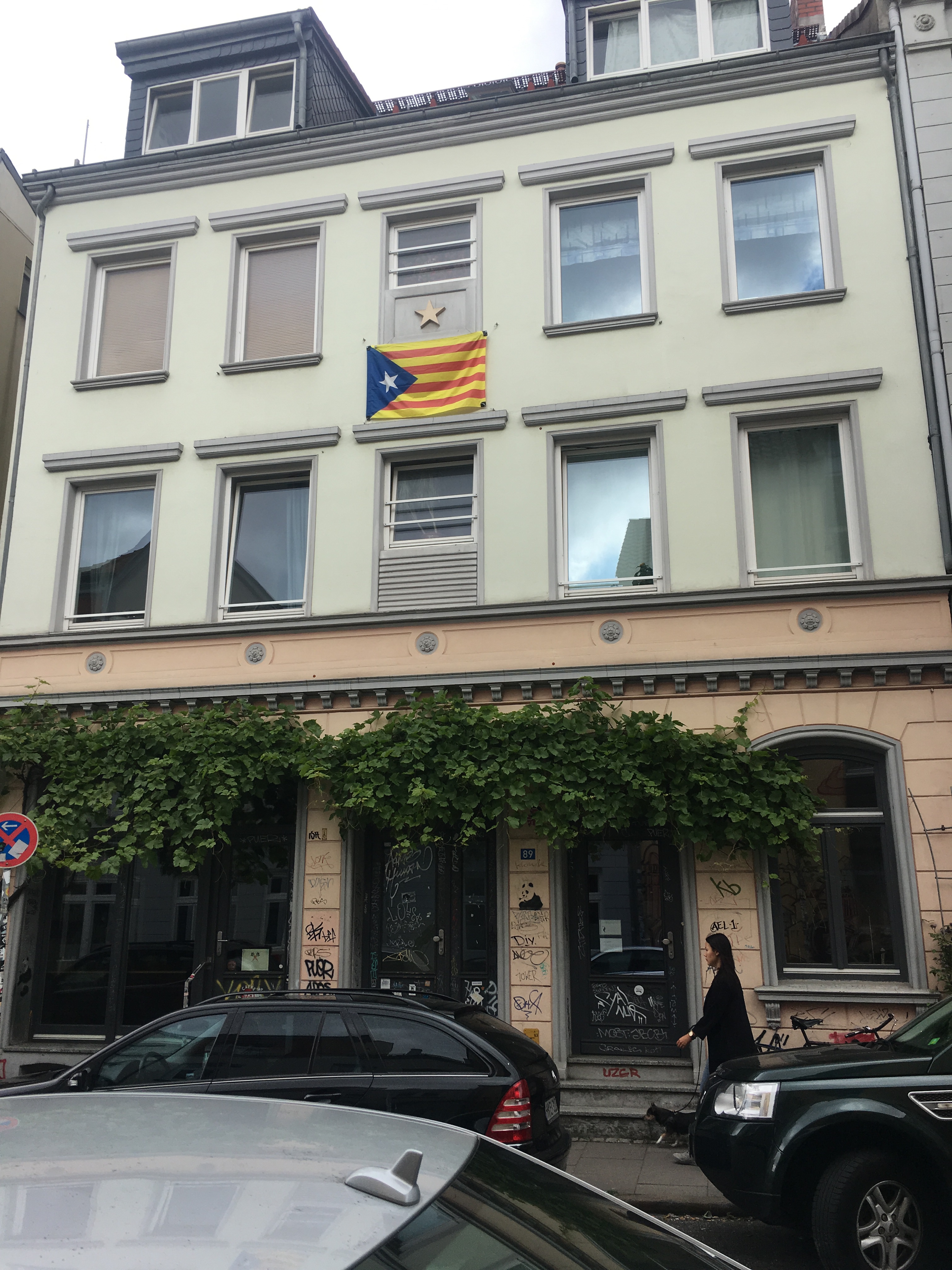
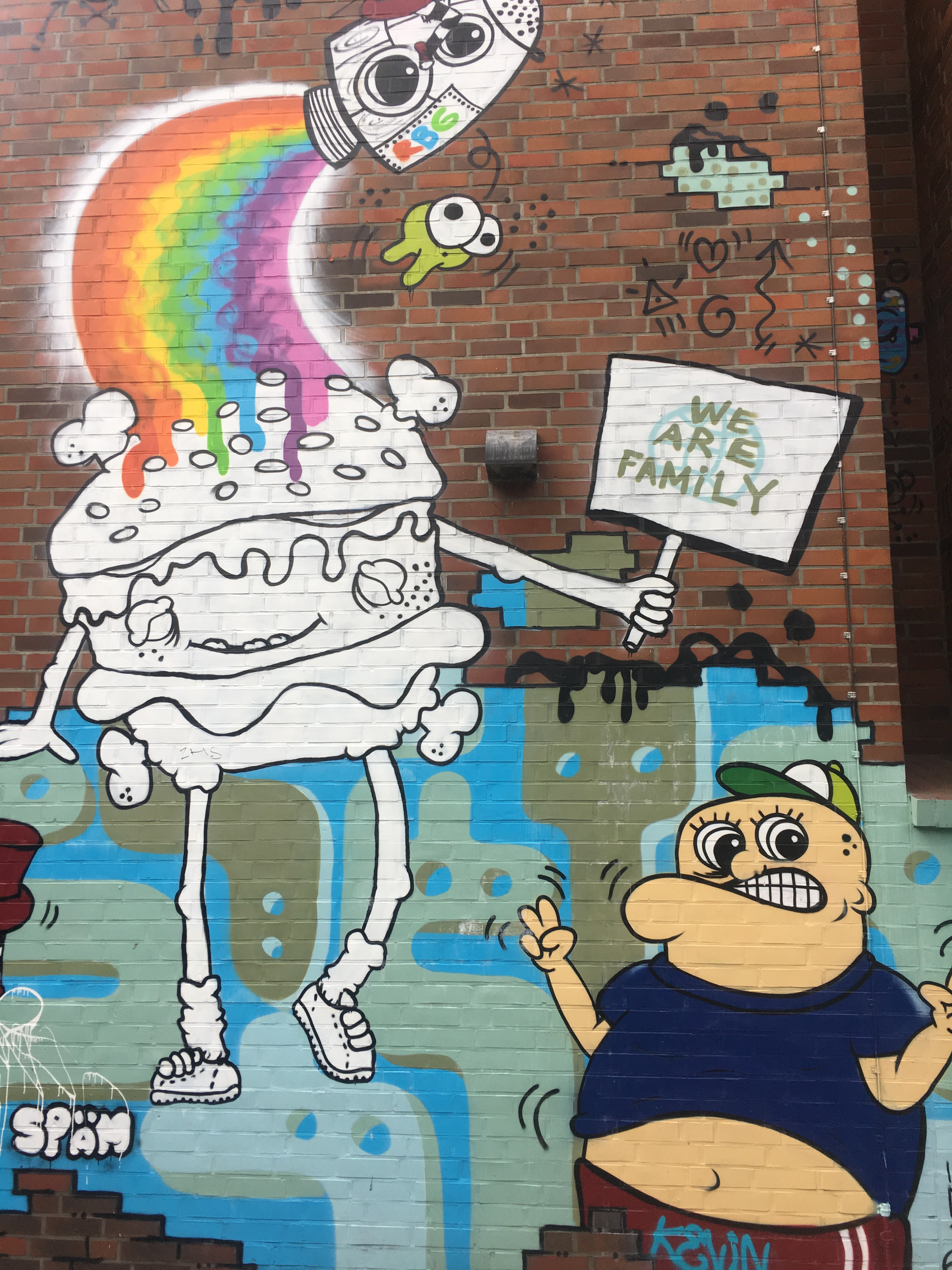
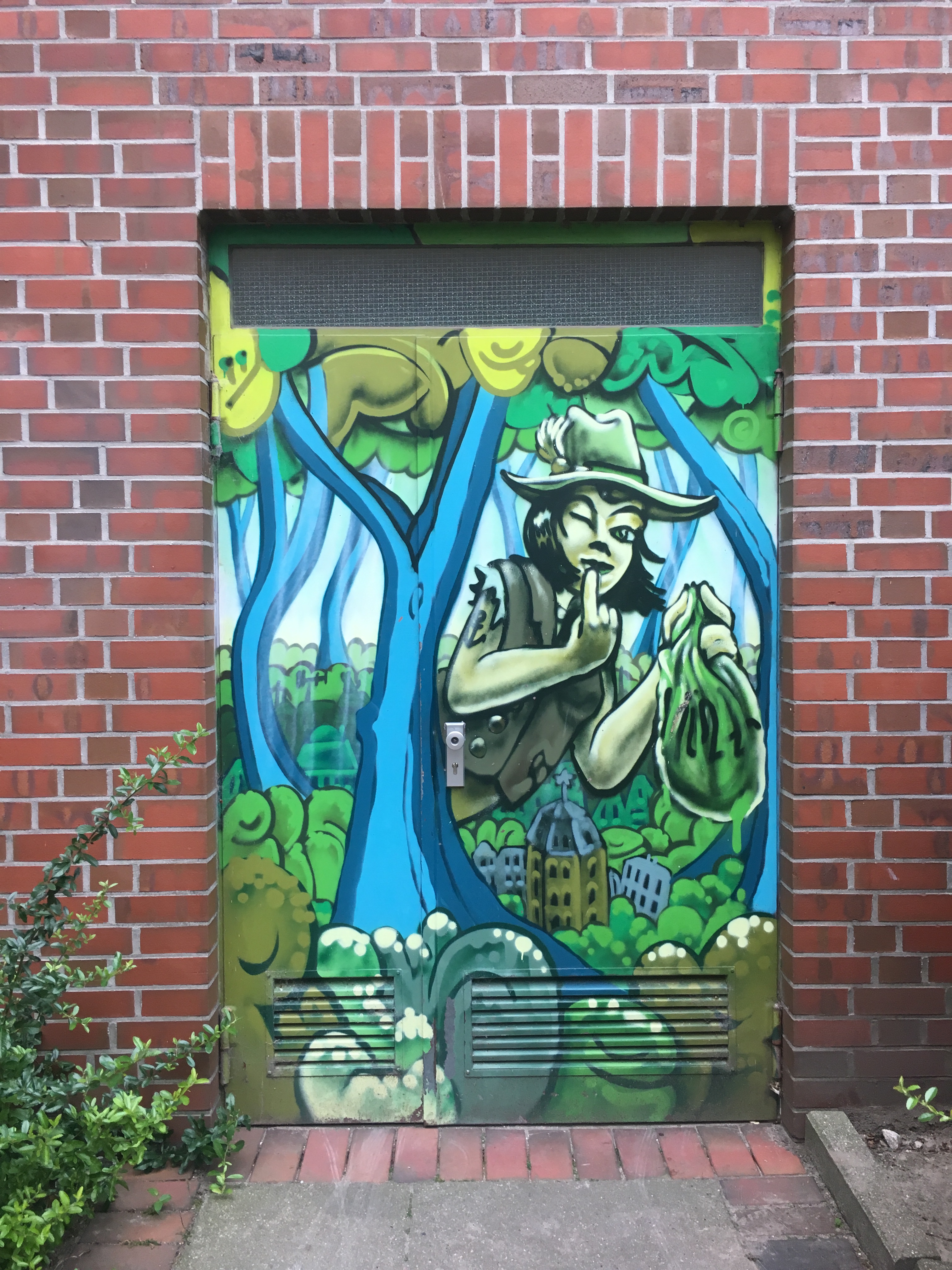
Hamburg is an easy city to fall in love with, something I realized upon our arrival. After checking into our hostel Backpackers St. Pauli, we sauntered through the neighborhood surrounding it in order to combat our fatigue. Colorful graffiti and band stickers thickly coated the sides of buildings everywhere you turned as locals cycled past us in the meticulously marked bike lanes. To my pleasant surprise, Catalan independence flags hung from some of the buildings.

We spent the day assimilating ourselves into the rhythm of the city before heading back to the hostel. Once night fell, we did what all tourists do in Hamburg: went to Reeperbahn, the famous red light district that served as inspiration for countless artists. Upon turning onto the street, a medley of neon lights, brothels, 99-cent bars, music venues, and sex shops all coalesce into a fanfare of light and color that briefly spellbind you into a condition of sensory bliss. Yet the appeal to tourists remains overt; we stumbled into a bar with a local musician playing American style country. We left after a couple songs. Sorry Reeperbahn, this music and these prostitutes just don’t do it for me.

We left around one in the morning and started to meander our way back in the direction of our hostel when we encountered an unexpected scene. As we turned off the main street, a soccer stadium came into view in the distance, a giant projection screen flickering behind the bleachers.

We changed courses and walked through the parking lot toward the darkened stadium. Guitarists jammed on portable amps and the homeless took shelter under the entrance barriers while we climbed the steps behind the front entrance gate before encountering an impromptu midnight film festival. Joining the attendees, we watched a black-and-white film that morphed into color once the main character reached their presumed arc. I vainly wished the film wasn’t in German so we could’ve understood it a little more coherently. It might’ve been a really terrible film yet we would have never realized!

The rest of the moviegoers applauded once the film ended. We clapped along with them, still unsure if we were supposed to be there or not. Upon exiting with the crowd, a tall blond man with a black band t-shirt and bike helmet presented us a small glass jar, a signal for donations. We threw in a couple of Euros before watching everyone mount their bikes and softly disappear into the cool summer night. I felt sentimental; the whole experience reminded me of touring during what feels like another lifetime ago.

Hamburg is an active, friendly, and open place. It’s ideal for aspiring artists and road biking. The food is phenomenal, not to mention the people running the restaurants. It’s challenging to sum it up in a straightforward fashion, especially after such a momentary experience there, though in that short stretch, I believe I genuinely sensed the distinguishable soul of the city. My love for Germany starts with Hamburg.

Sitges, Spain – February 2018

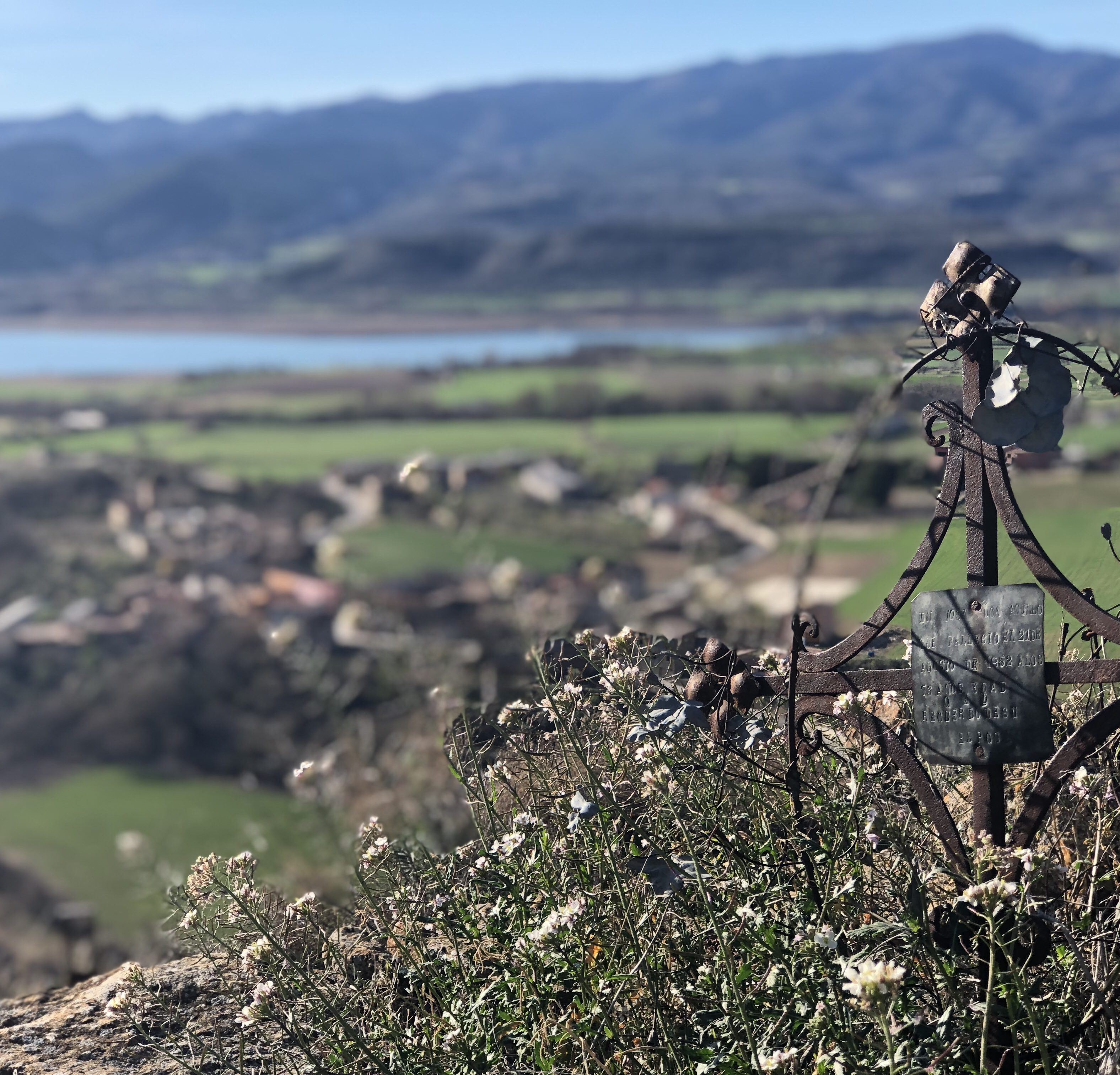
“Tu Pasas Por Mi Casa Pero Tu Recuerdo Permanece”

A forty- five minute excursion on a bus from the Barcelona airport led a group of friends and myself to Sitges, a town of which I’d never been aware before my arrival to Europe a few months prior. My mind would always immediately drift to Barcelona at the mention of the Catalan region of Spain, a major indiscretion on my part, as I would learn that weekend when I first visited there.

We chose Sitges for its legendary parades for Carnival. “You’ve got to go to Sitges for Carnival,” practically everyone in Andorra told me. “They have the best celebration for Carnival, way better than Barcelona.” I decided to take the local opinion up to task. Sitges is also known for its open attitudes towards the LGBTQ community, adored for its gay bars and cabarets. Indeed, it’s the best location for gay tourism in all of Spain. Prepare to dance.

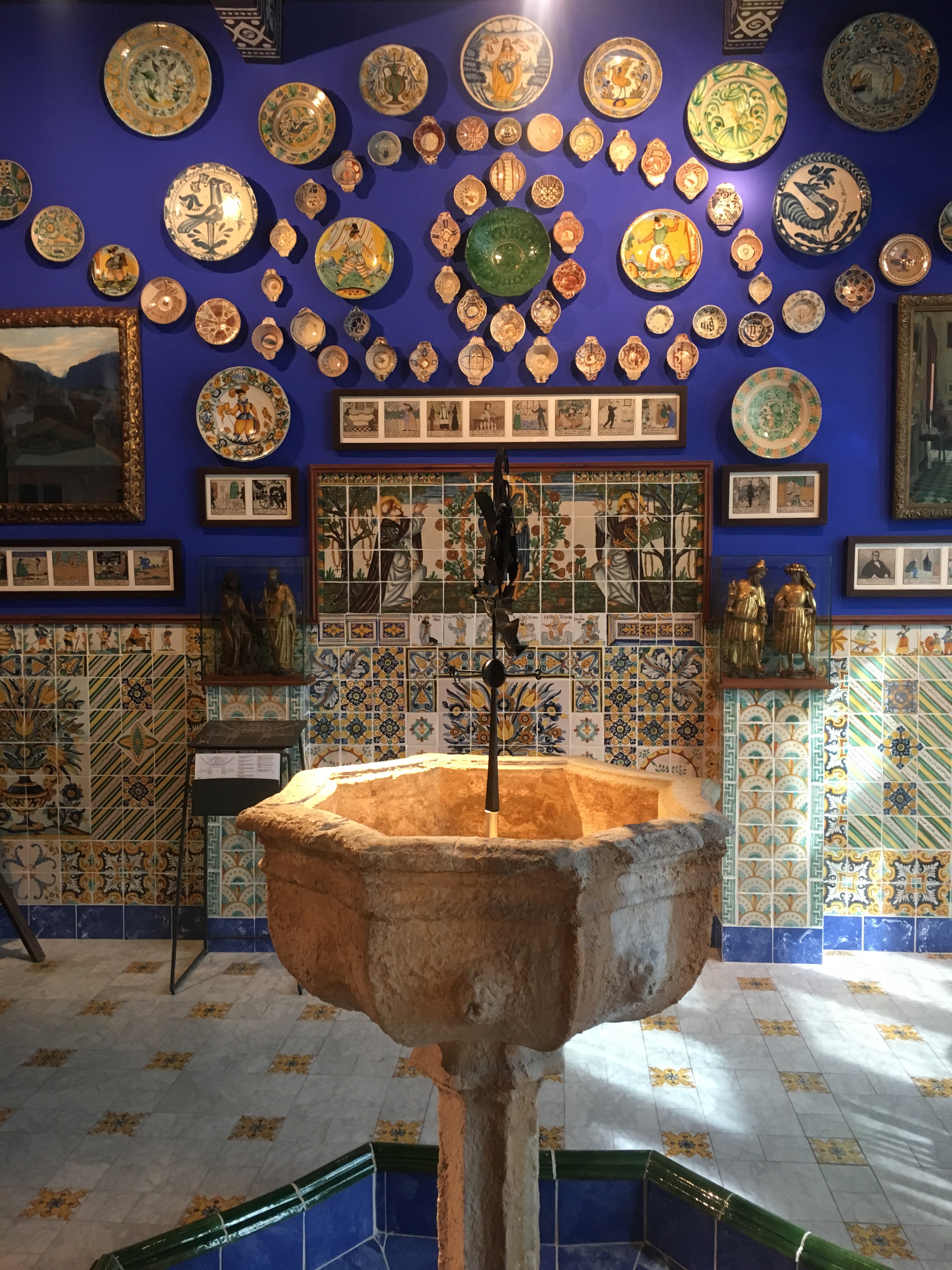
Though it should be noted that lively nightlife is equilibrated by a relaxed beach culture. Many of the things you associate with Spain are here, from flamenco street performances to men selling mojitos on the beach (don’t buy them, they’re way overpriced). You’ve also great art history, the Museu del Cau Ferrat situated at the helm of the movement. Originally a workshop home for esteemed artists in the late 19th century; it has since become a display of breathtaking sculptures, ceramics, paintings, archaeology, and furniture. If art is not your thing, it’s worth the ticket for the window-view of the sea at the back of the house, a room surrounded by sculptures and bathed in an aqua glow from the ocean.

Do yourself a favor while you’re there: go out at night. Personally, I’m not really a big nightlife person, but there are some places that I simply cannot resist the urge to witness the spirit of repressed self-indulgence that only seems to come from excessive consumption of alcohol and music. Sitges is one of those places for me. Perhaps I’m biased because I chose the most festive weekend to visit this vivacious coastal town.

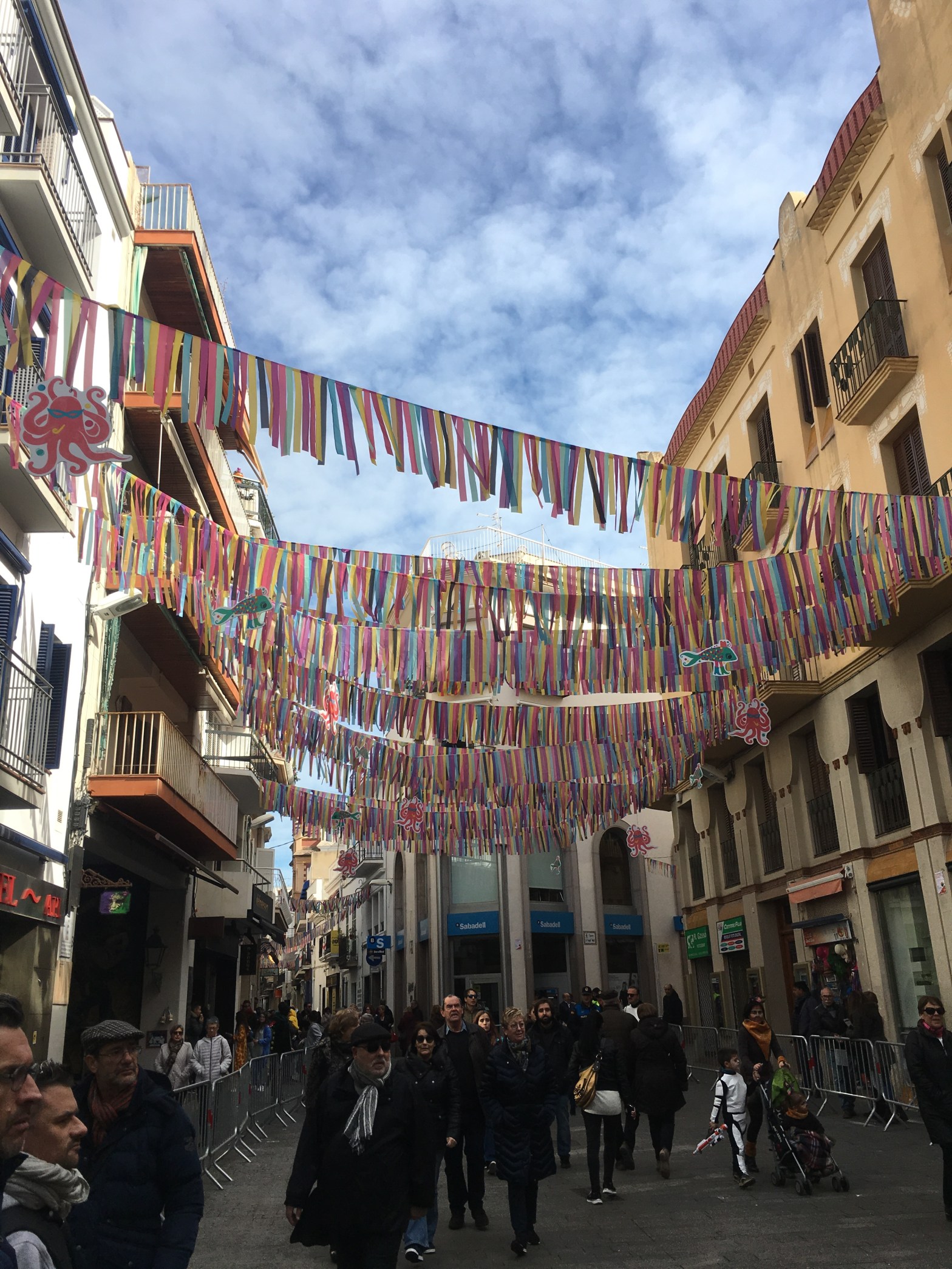
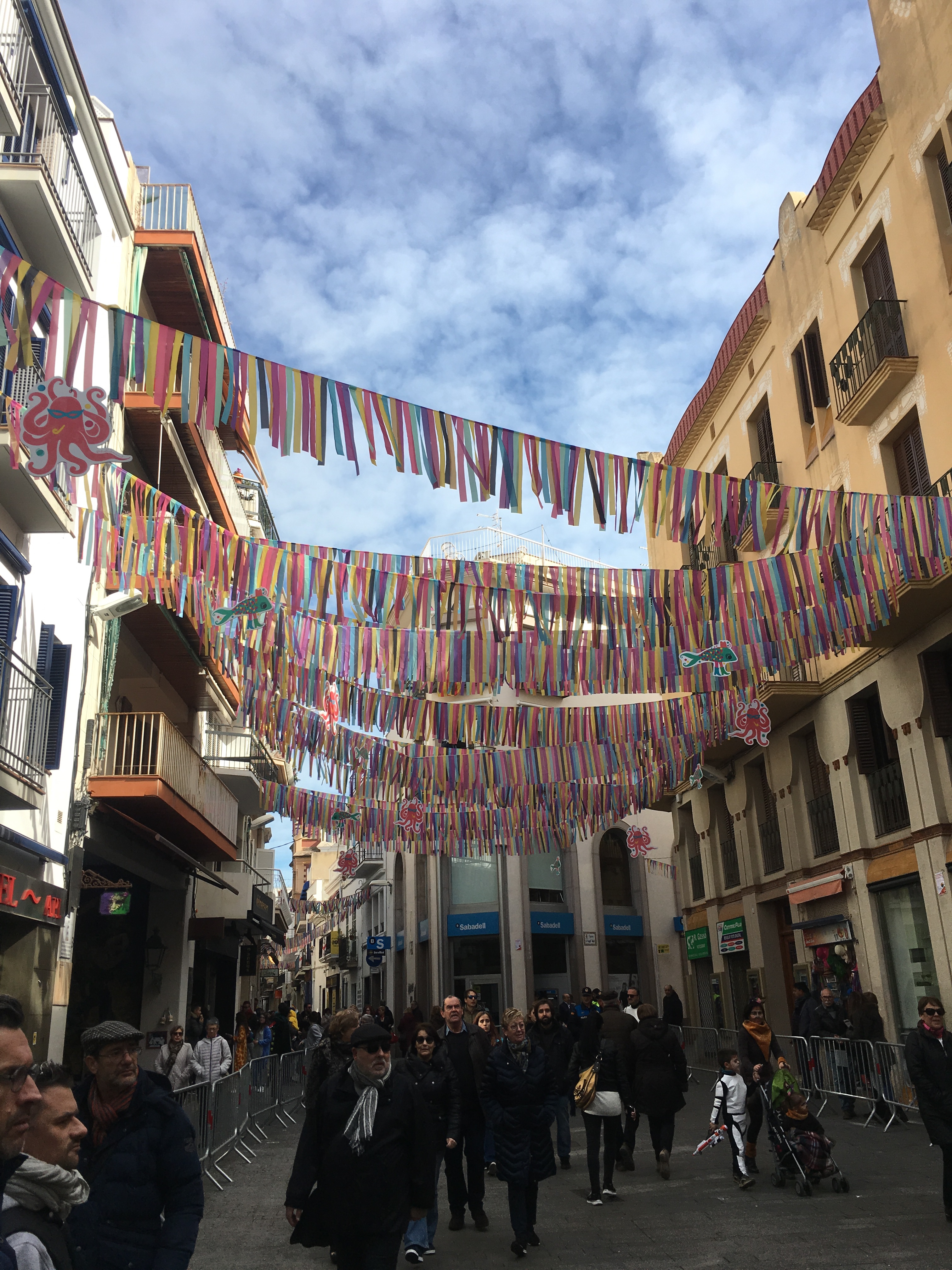
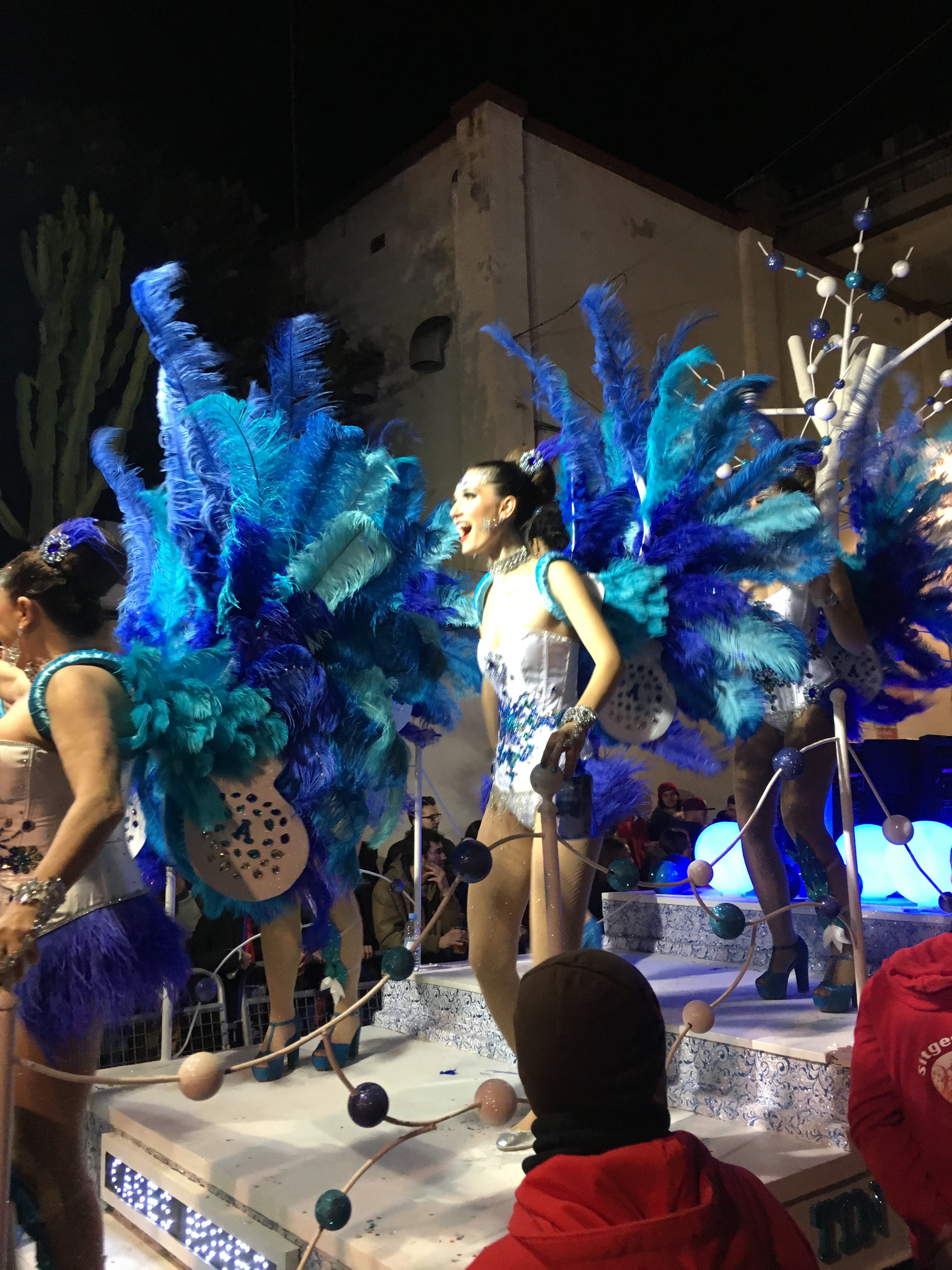
Carnival parades happen as early as midday there, but they peak in the evening. Countless floats and choreographed dancers flood through the downtown street in a sexual fervor as hordes of drunken people cheer and gaze in stupor at the mesmerizing effect of their glamorous outfits and masks. If you don’t wear a mask on Carnival, you’re a loser; of course you must hide your identity before engaging in inebriated foolishness and confronting your neighbors at church the following day for repentance, why would you even question that? Tractors pull the floats down the street, blasting Cumbia and Reggaeton, spirits are elated everywhere you look. Did I mention all the beer and liquor surrounding you while you’re there?

After the parade, we ended up at a party in the street where the spirit of indulgence was in full-effect. Everywhere you turned, crowds of people flocked to the center square donning hilarious costumes. I swear I met Dave Franco, though for some bizarre reason he was wearing a Disney princess dress and worked as a psychiatrist in Barcelona.

I don’t know when we returned that night, but the next day wielded an extreme hangover. We got coffee from a local café and hit the road, heading back to Andorra. On the whole, my brief visit to Sitges proved to be remarkable, despite the cement brick pounding in my skull on the drive out of town.

First Post

This blog is by and large an experiment. I’ve been traveling consistently for over ten years now and I’ll be using this platform to keep track of retrospective musings on these beautiful places. I’ll write about the adventures I’ve been on, the difficult times, the places that shocked me, and the ones I fell in love with. I hope maybe I’ll even inspire someone to go to one of these places, or to have a journey of their own. I appreciate anyone who takes the time to read this.