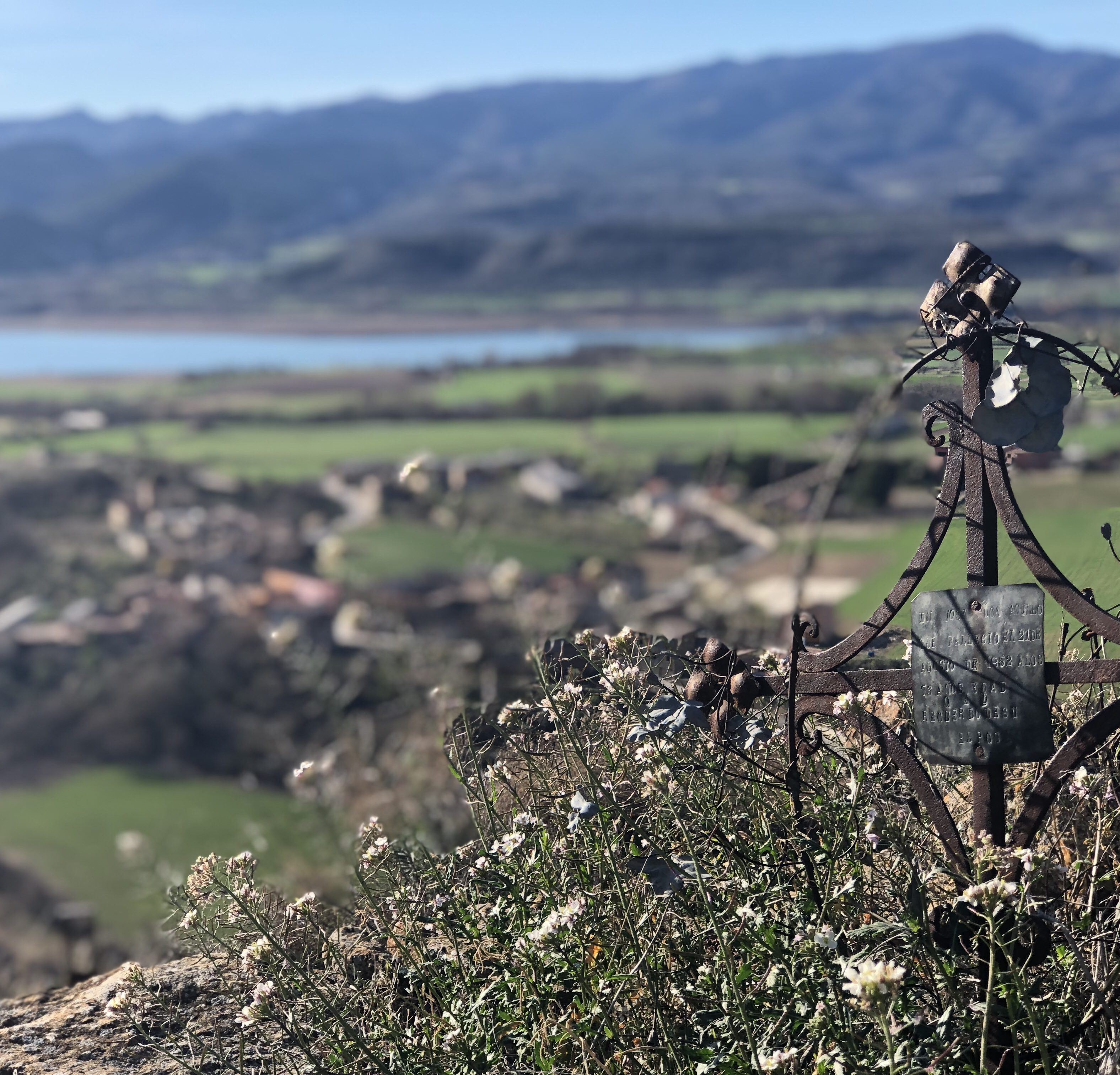
Visiting an abandoned village in the heart of Catalan country in 2019.
For the past fifty years, numerous villages in Catalonia have sat as skeletons, rotting away due to abandonment. The ghosts of communities, markets, homes, and cafes linger in the soft breeze at the foothills of the Pyrenees.
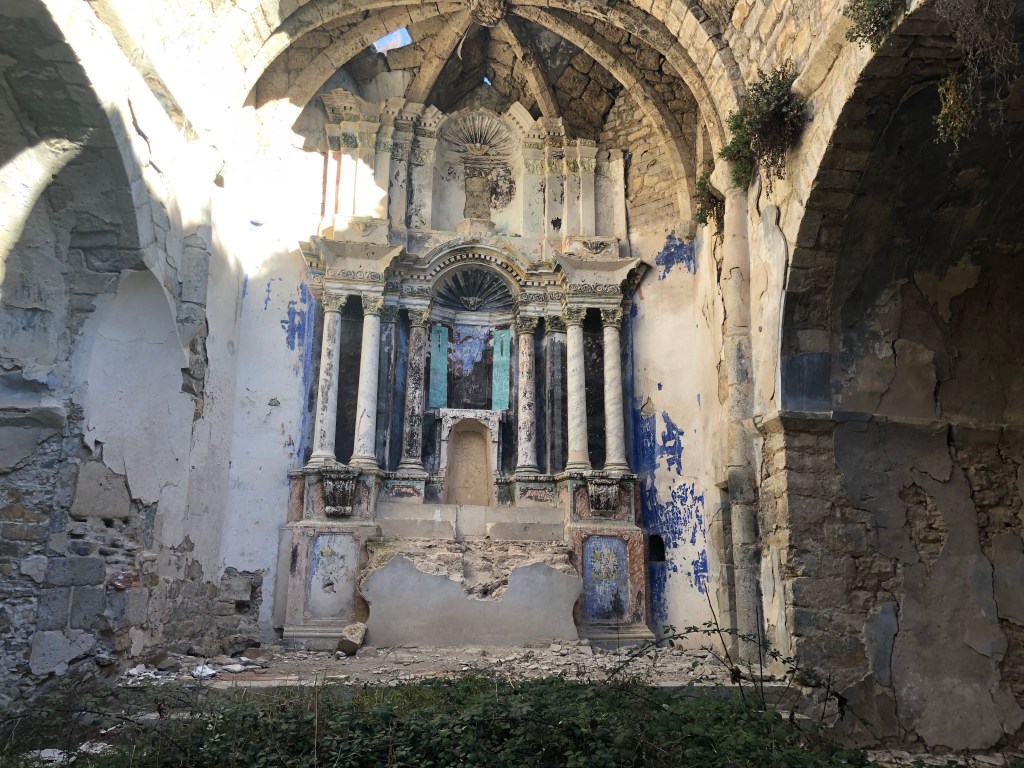
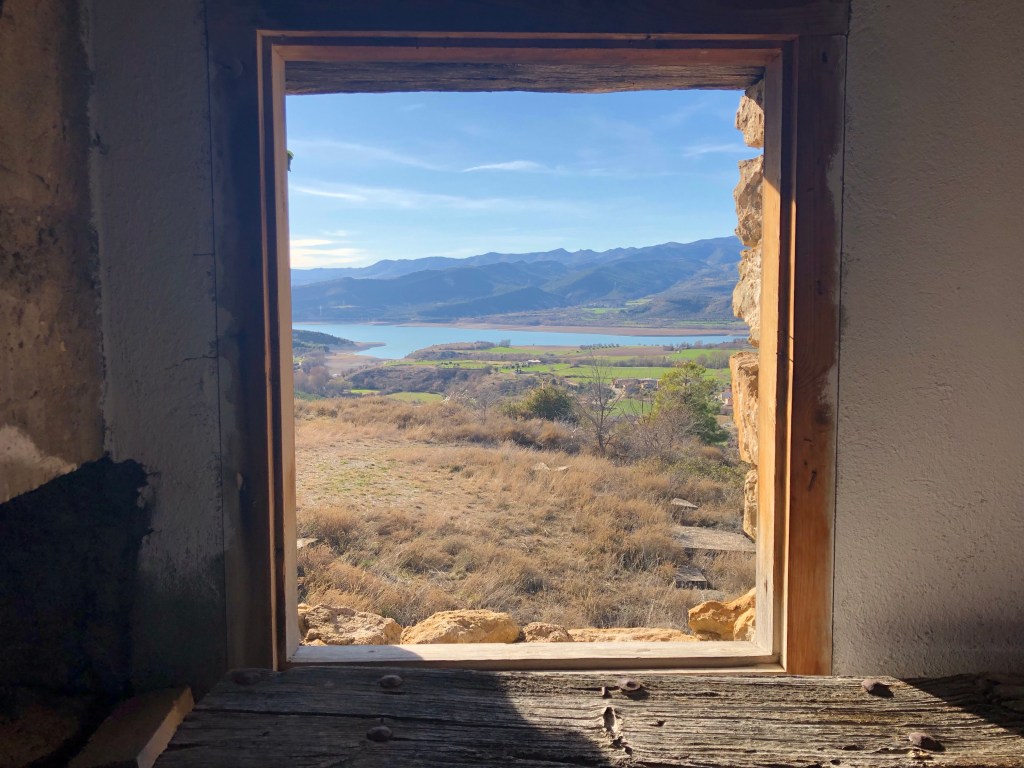
One such place I visited was Aramunt Vell. Deserted in the 1950s, it’s perched atop a hill next to neighboring village Aramunt. The town overlooks a clear azure lake that glints in the mid afternoon sunlight with an aura of tranquility. Though it’s empty, the village felt as though it were breathing upon my entrance. It seems to pulse beneath the sea of ivy and moss growing over the concrete and stone buildings that stoically stand against the tests of time. They have withered in their isolation, the concrete having oxidized into fading hues of pink and red. Wild flowers have also emerged on the church floors.
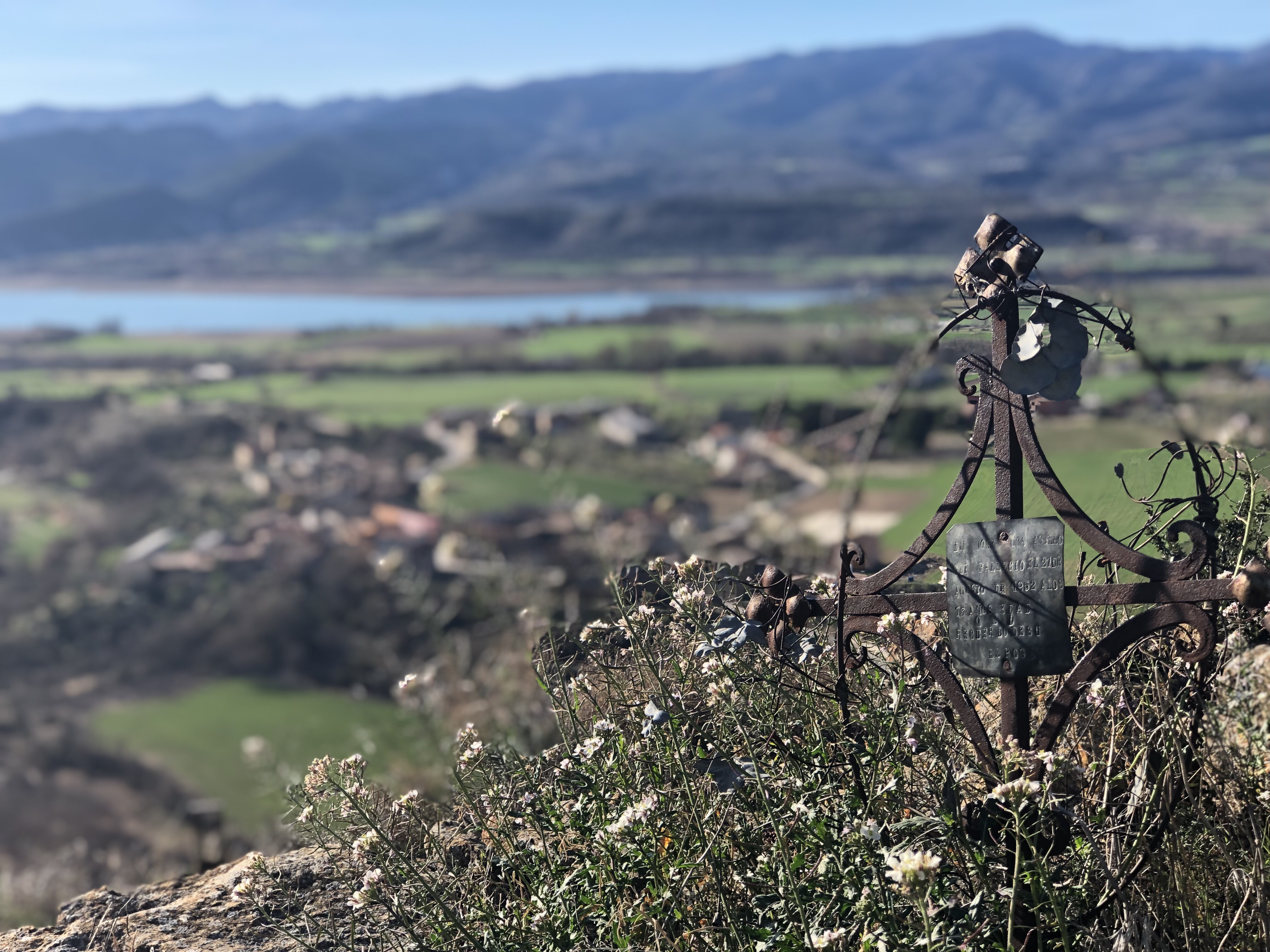
The withered cathedrals were of gothic origin. Their arches have deteriorated and fallen at their peak so that they’re now disconnected. The ceilings are open to the bright, expansive skyline. Flowers bloom where the pews once stood. I sidestepped past the poison ivy and walked along the altar. Graffiti adorned the place. The wooden floorboards along the altar creaked as I stepped out into the graveyard. The cemetery took up a rather small patch of land. There’s a faded path that leads to nowhere along the side. Flowers and bouquets lay on top of some of the headstones. Many of the dates on the graves revealed short lives through the late 19th century. Behind the graveyard, there was an alluring view of the lake. Again, I felt the pulse of life in a ghost town.
Beneath the town there was the village Aramunt. Many of the last residents of Aramunt Vell migrated down to this village during its final days. They left for convenience; electricity never reached the top of the hill. When the well had finally run dry, locals had to climb down the narrow path along the hill to the turquoise lake, carrying large buckets of water. It must have been a long, taxing journey to quench your thirst and wash your clothes. I couldn’t imagine it on a daily basis, coming from my own background of American middle-class wealth. The villagers slowly abandoned the town so as to pursue a better life in the neighboring village.
For some of them, the transition was difficult. I met a woman in Aramunt. She asked me, “Where are you from?”
“United States. Virginia, specifically,” I said.
“Did you get to the town on the hill?”
“Yes, but it was difficult to climb down one of the paths. Very narrow and a lot of plants.”
“I’m originally from that town.”
“Really?”
“Yes, I left when I was five years old. My family and I were among the last to leave. It’s hard to abandon your home. The place you grew up. The place you prayed. You understand?”
“Yes,” I replied. My Spanish was limited, but I managed to get by speaking to her.
“The last one to leave was the priest. It’d been his family’s home for generations. He refused to go initially. At one point, he was the only resident living in the town.”
“Wow, I can’t imagine.”
“There was no electricity. We were too far from the markets. Everyone knew it was time to go. That’s life though.” She smiled at me.
 Bird On the Wire