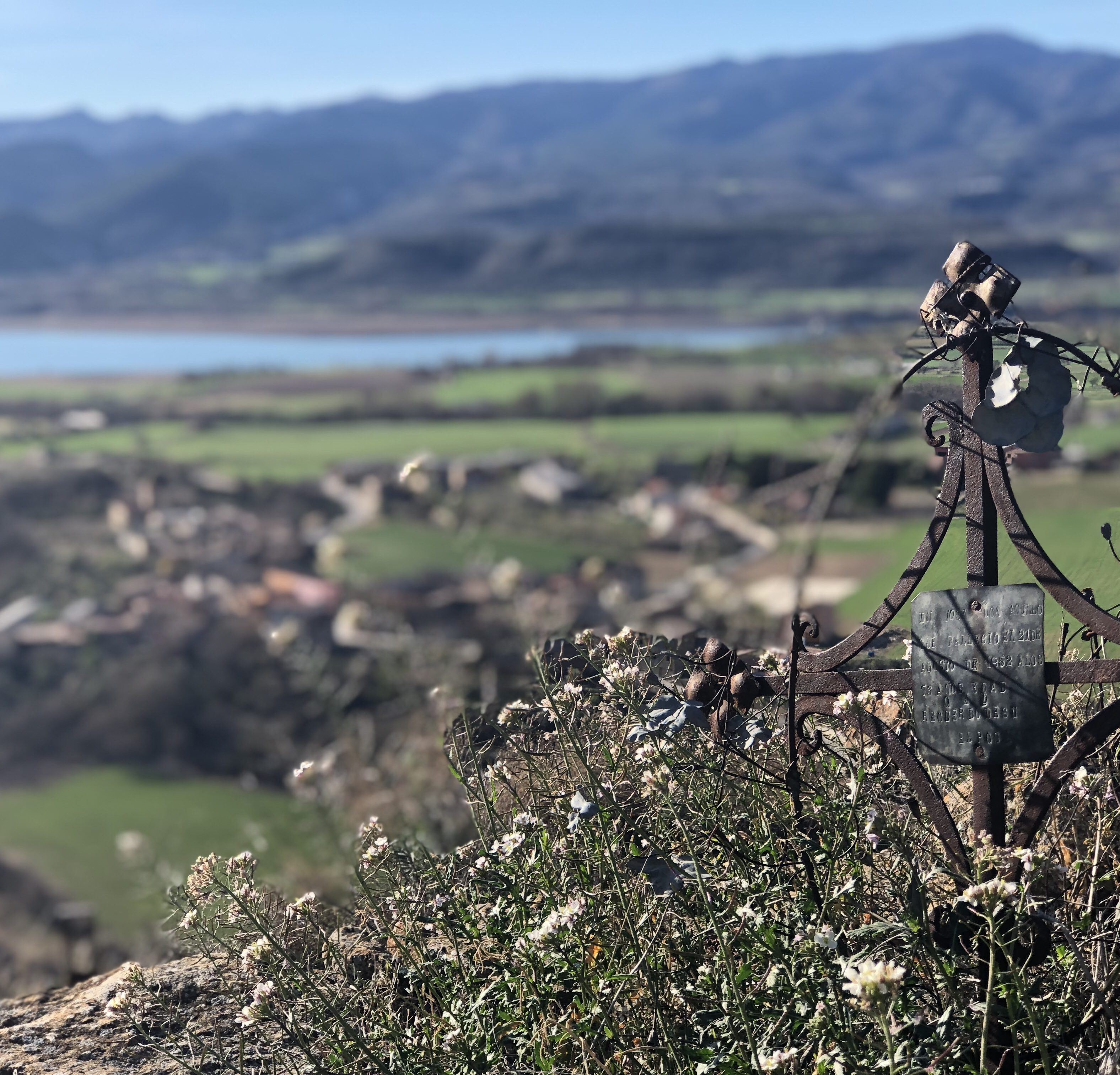
“…There’s no real guidebook to Morocco, no way of knowing where the long trail of the Rif is going to land one…” – Edith Wharton

During the Spanish Reconquista, thousands of Muslims and Jews fled the mountains of Sierra Nevada by order of Ferdinand II of Aragon and Isabella I of Castile as they united the kingdoms of Spain into one Catholic Monarchy. While this sequence of events ultimately led to the modern incarnation of the Iberian peninsula, many minorities beneath the crown suffered accusations of heresy against the Church. As a result, large numbers of exiles ended up settling in Northern Morocco and sought refuge deep in the Rif Mountains. They began to establish themselves there. One of their refuges would become Chefchaouen, or Chaouen, as the locals prefer to call it.
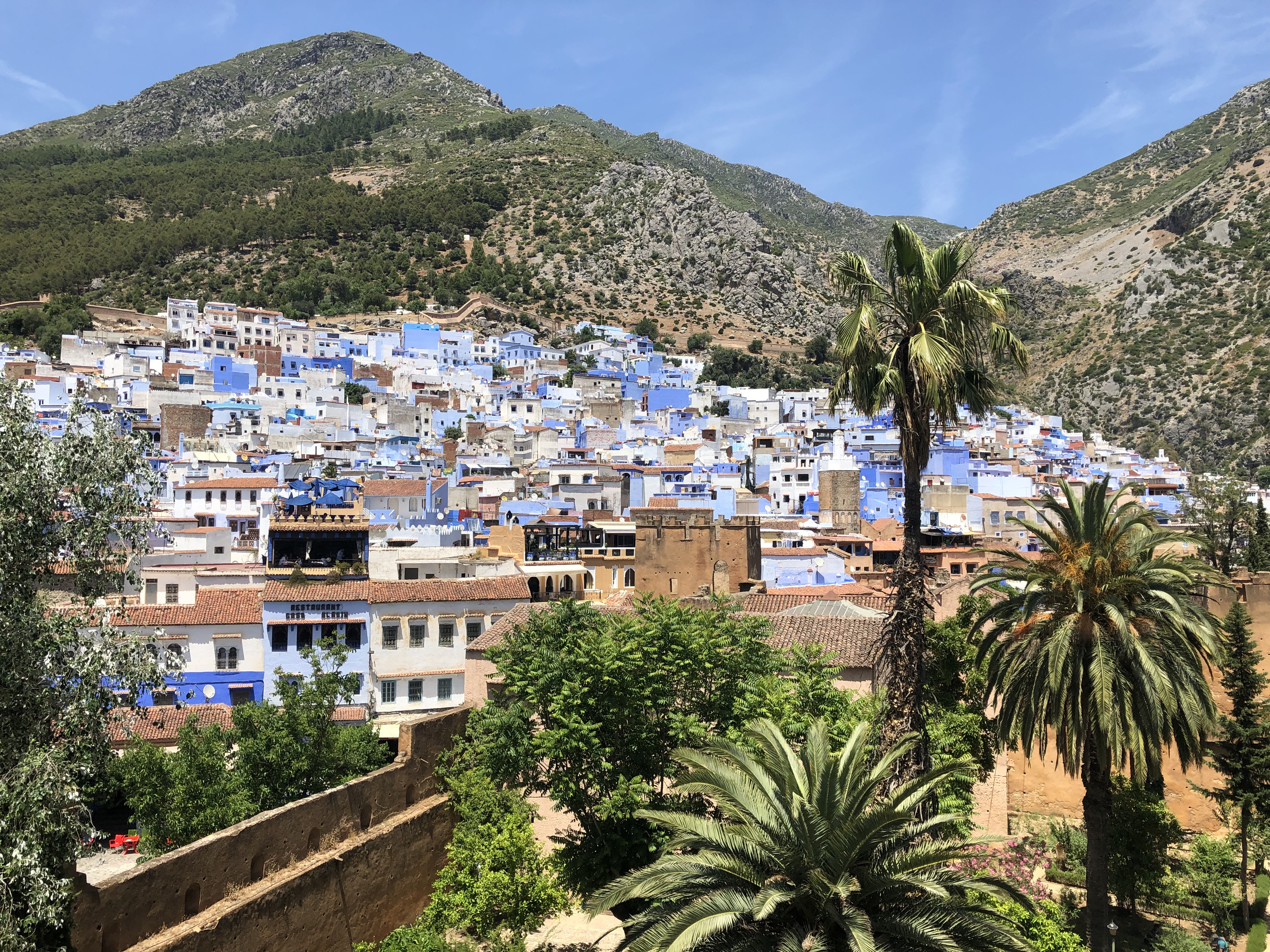
Though it has since become a tourist hotspot (myself included, I can’t deny that), the evidence of the city’s establishment as an Inquisition refuge still permeates into this small Moroccan city’s vibrant culture. French is unnecessary here as almost all locals speak fluent Spanish. Street signs and neighborhoods have Castilian names. Amongst the traditional blue houses and markets that cover post-cards in the tourist information centers are various churches and fortifications of Spanish or Portuguese architectural origin. The city is around 600 years old – rather young for Morocco’s standards – yet still feels European in many regards.
My partner and I arrived to Chaouen in the late afternoon. We got off the bus and climbed a steep hill on the outskirts of the Medina to our Airbnb. The sun was brutal at this hour, forcing us to stop for water and tea less than halfway through our uphill route. We finally met our hosts – an extremely gracious, patient Italian and Moroccan couple – who led us to our homestay for the next two nights. After showing us our room and a brief introductory chat about the location of the apartment building in relation to the city center, they sat us down and served us coffee. They gave personal recommendations of their favorite sites and restaurants. We thanked them and headed out to enjoy our last few hours of sunlight. My skin was crawling with the amount of coffee and tea consumed that day; we hadn’t eaten a proper meal since early in the morning and I felt my system begging for more sustenance and less caffeine.

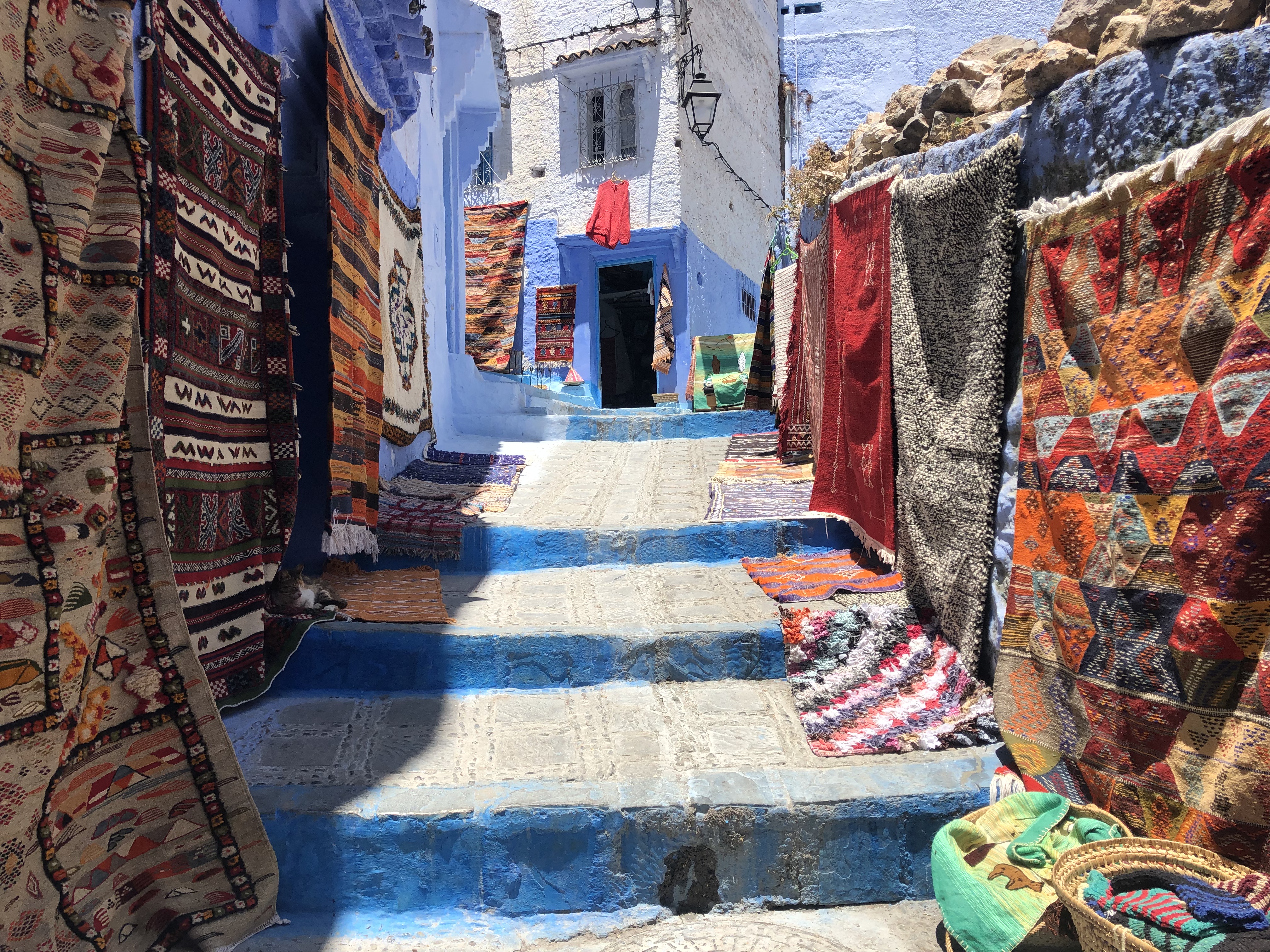
To say that Chaouen has an unforgettable medina and Kasbah would be an immense understatement. While it’s undeniable that locals exaggerate their market presentation to reel in the daily throng of tourists, one can’t deny the breathtaking atmosphere it exudes nor resist the giddy, childlike thrill of getting lost deep in the cloudy blue backstreets. It’s charming and picturesque; if you travel for instagram fodder (I hope you do it for more than just that) this is the Moroccan city for you. It’s also an easy medina to navigate. So easy, in fact, that it’s color-coded: if the floor is blue, there’s no exit. If you’re looking for a way out, don’t follow the blue floors. I know they’re mesmerizing like a moth to the flame, but you’ll only wind up on someone’s front stoop and come off as another ignorant, misguided tourist (which you are – always keep that thought prevalent).

We ate dinner in the Kasbah that night. It was Friday, the best day to order cous-cous, according to our Airbnb host Luanne. “The cooks prepare the semolina early Friday mornings, giving you the freshest taste,” she’d told us. “If you were to order it any other day, it wouldn’t taste as good. You have to take advantage tonight!” Naturally, we took her advice. Any insider information helps!
The next day, we continued exploring the blue souks before wandering along the river outside the old city walls. Locals had been convening there all day it seemed, sitting at low-plastic tables positioned in the center of the shallow river, their pants rolled up and feet splashing in the creek with a carefree gentleness. They smoked hookahs and cigarettes, laughing together as they enjoyed the cool water on their feet. We sat alongside the river and watched them and the families and teenagers all flock by in the midday sun. Our time in Chefchaouen felt too short, though I’ve found myself saying this wherever I go.
We departed for Tetuoan and Tangier the following morning. After saying goodbye to our hosts, we made our way back down that steep hill to catch a grand taxi that would take us back to where we had started a few days earlier. After about an hour we managed to flag one down and hop in the backseat. We waited for the middle row to fill up… A mother, her teenage daughter, and a single man joined us a few moments later. The taxi driver took off as soon they closed the side-door.
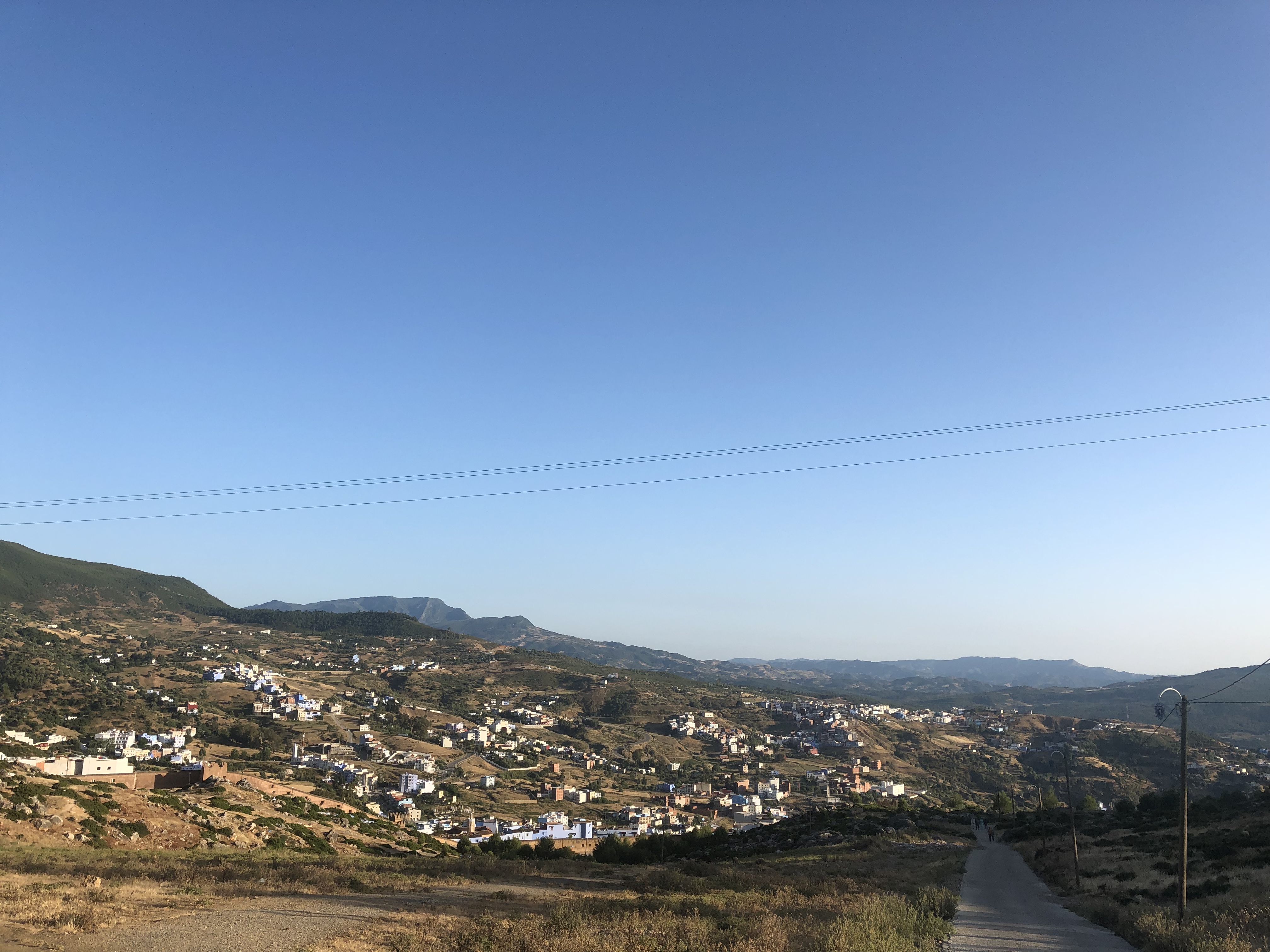
The highway back to Tangier followed the power lines running through the mountains. The roads carved through ravines filled with pink, flowery bushes and endless fields of olive trees. We passed lakes ranging from dark blue to bright turquoise. Even this early in summer, the heat was so strong, it felt palpable; the taxi-driver had a cut-out square from a cardboard box pressed against his window as to block out the unforgiving heat invasion bearing down on him as he weaved through the two-lane traffic, dodging cars coming against him without batting an eyelash.
We passed small vendors on the side of the highway selling ceramic and pottery. Local family-run restaurants sprinkled the highway. Locals sat outside in full Muslim garb, drinking mint tea, playing chess, rinsing their hands in the Sebils, laughing together as they relish the shade they’ve found under the outdoor terraces. We watched all this pass us by from the backseat of a cross-country taxi ride in moments that felt both fleeting and undying until our sudden arrival to Tétouan.
 Bird On the Wire